
Acquired B Antigen Phenomenon
A sensitive flow cytometry assay for the semi-quantification of RBC AB antigen levels was used to assess patient samples and evaluate in vitro experiments. In addition in vitro experiments were performed to elucidate possible mechanisms underlying this phenomenon.
Help I Ve Acquired A B Blood Bank Guy
This acquired phenomenon occurs mainly in the colon.

Acquired b antigen phenomenon. Acquired B antigen and polyagglutination in a patient with gastric cancer. An enzymatic pathway in the human gut microbiome. Annesley T HE JULY 11 1959 issue of the British Medical Journal contains two articles describ- ing the acquired-B phenomenon.
A1 acquired B cells chemically acetylated lost their B reactivity and enhanced their. Blood is crossmatched on an A positive person with a negative antibody screen. And yet whether you agree its interesting or not is irrelevant because it is simply one of those blood bank occurrences you will need to.
Two elderly type A patients were found to have acquired B antigen one secondary to Escherichia coli and the other to Pseudomonas septicemia. The patient received a. The Acquired-B Phenomenon W.
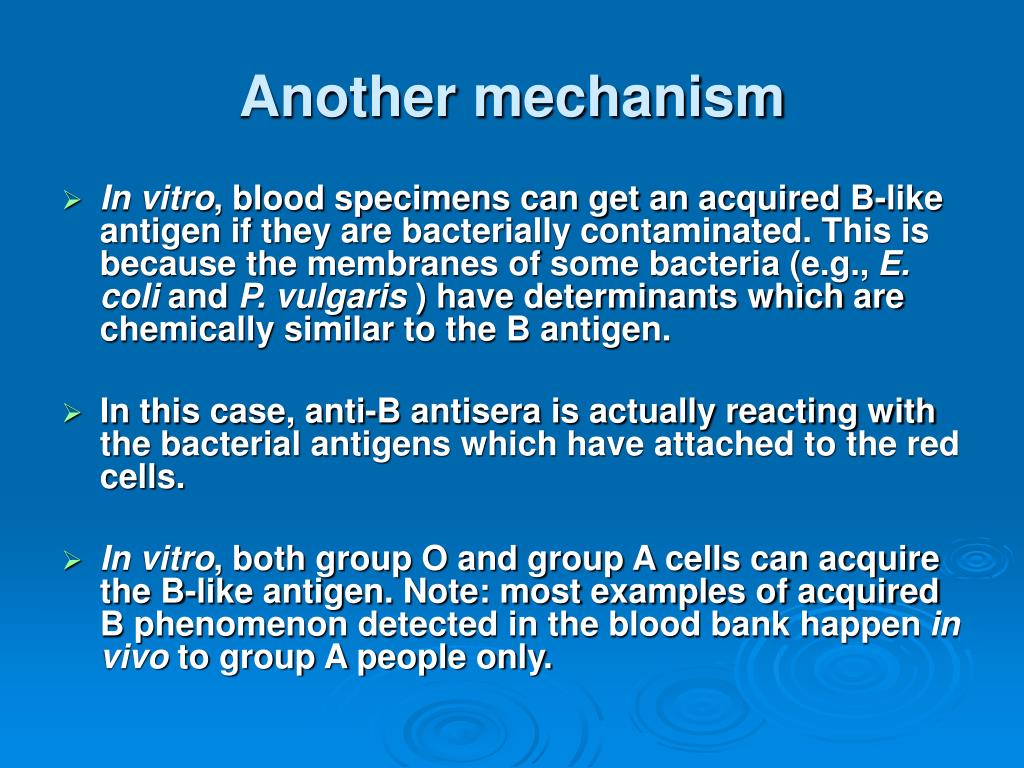
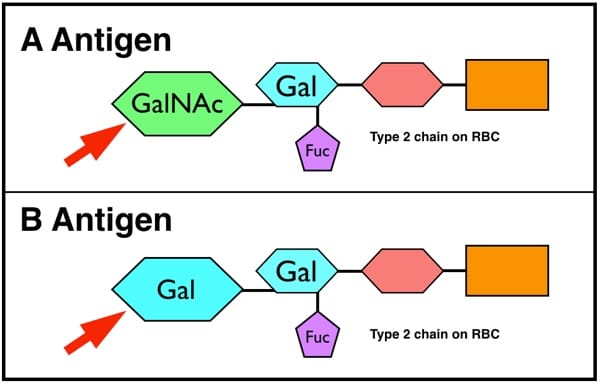
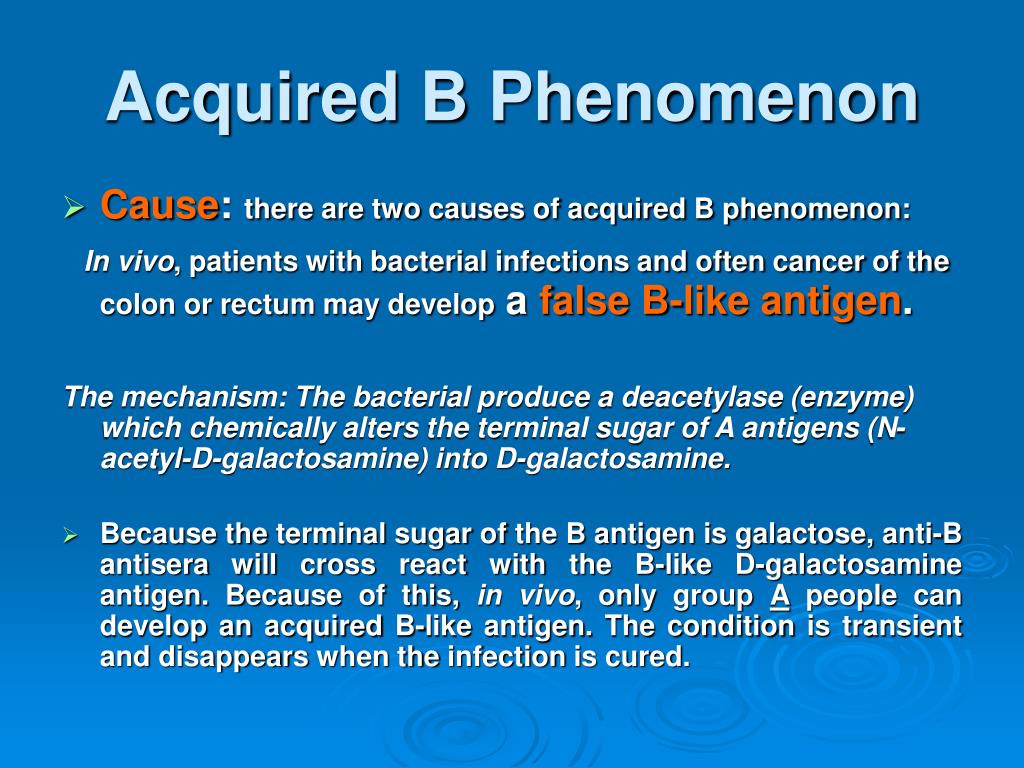
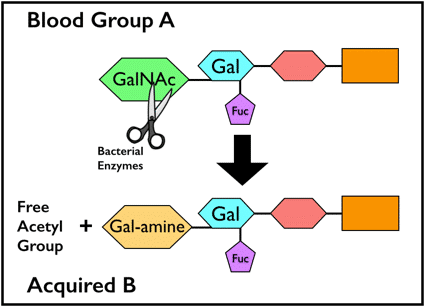
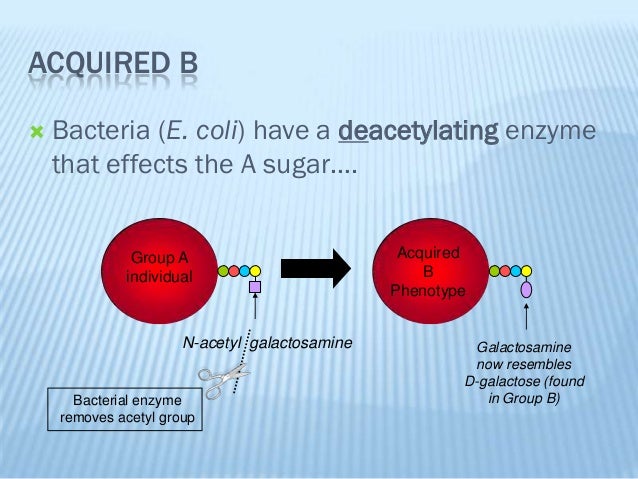
The second type of acquired B that may be called the passenger antigen type is caused by adsorption of B-like bacterial products on to O or A cells but occurs only in vitro 18. The bacterial deacetylase modifies the terminal α -N- acetyl-D-galactosaminyl residues A antigen into α-D-galactosamine which is biochemically quite similar to α-D-galactose B antigen and thus reacts with. Acquired B results from the action of bacterial deacetylase which converts N-acetylgalactosamine to -galactosamine which is very similar to galactose the chief determinant of B.
Non-secretor group A1 subtype Rh positive with auto antibodies in a patient with urinary tract infection with E. Membrane Antigen Capture Enables Identification of Mouse and Human Hemagglutinin-Specific B Cells. In addition in vitro experiments were performed to elucidate possible mechanisms underlying this phenomenon.
1-His probable ABO type is A positive. Identification of 5 novel feline erythrocyte antigens based on the presence of naturally occurring alloantibodies. Acquired-B phenomenon in a neonate presenting with necrotizing enterocolitis.
When this happens monoclonal anti-B reagents will strongly agglutinate this. Acquired B antigen in ABO blood group system. Conditions associated with the production of bacterial enzymes can result in modification of the immunodominant A group sugar N -acetyl- D -galactosamine into a structure that highly resembles the B group sugar structure D -galactose.
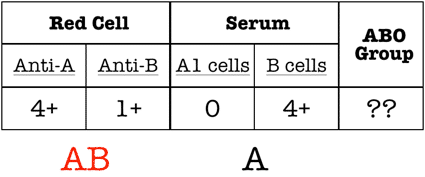
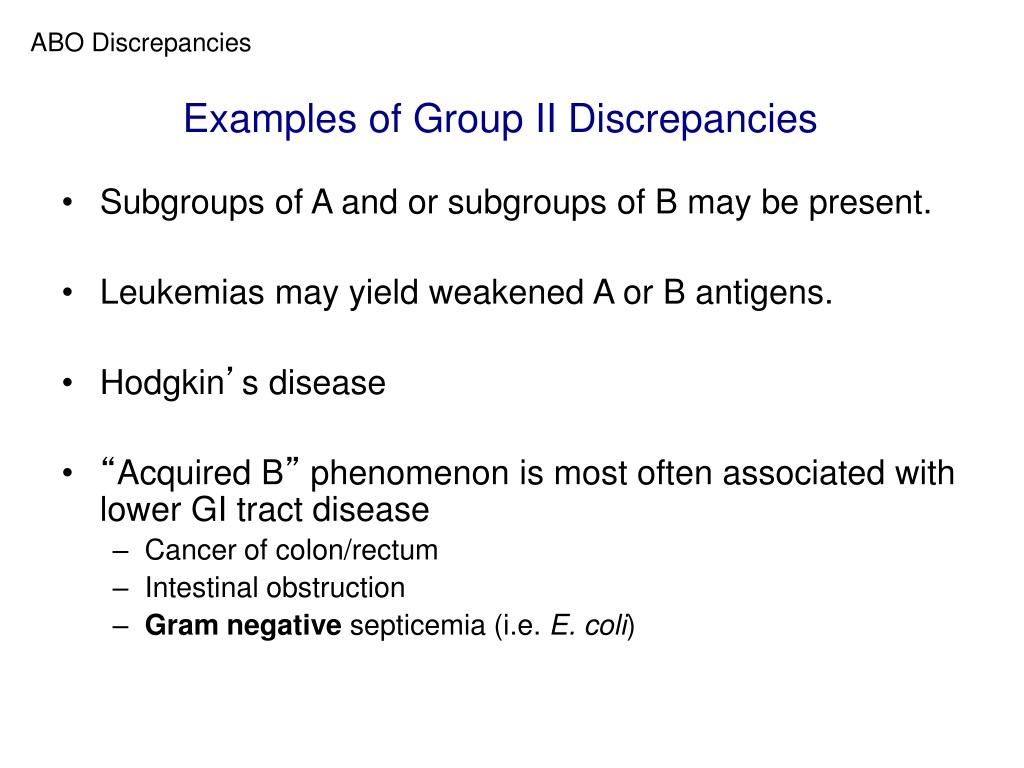
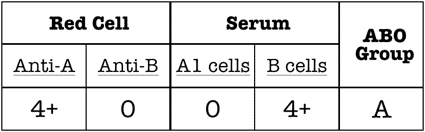
This explains how the acquired B antigen phenomenon happens viz. An uncommon ABO discrepancy that occurs when red blood cells from blood group A patients come into contact with certain gram-negative bacteria especially those of colonic origin in cases of colon cancer and gram-negative sepsis. 2-Weak reaction 1 in Anti-b forward typing 3-Acquired B phenomenon occurs in blood group A usually A1 which is caused by the action of bacterial enzyme which modifies A sugar N- acetyl-D-galactosamine into D-galactosamine which is similar to B sugar.
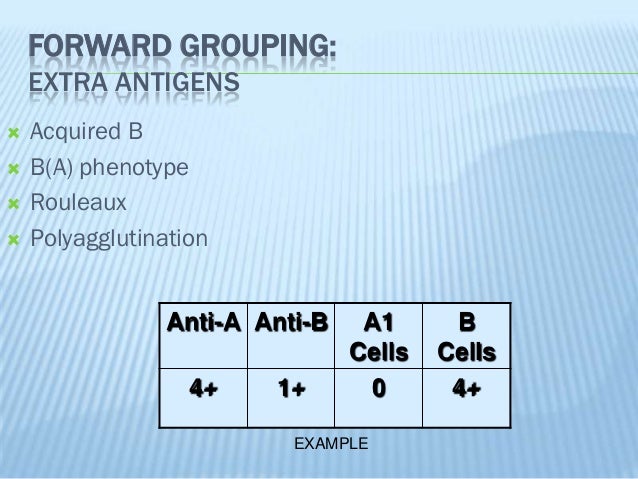
Anti-A Anti-B A1 Cell B Cell 4 1 0 4 Acquired B Phenomenon can occur in the setting of infection by gastrointestinal bacteria. Fatal HTR due to acquired B. John Judd and Thomas M.
In 1970 we postulated that a deacetylase enzyme could be responsible for this B-like antigen. The acquired B phenomenon is an interesting one as it is an insightful indicator linking lab serology with clinical diagnosis. The acquired B antigen is a rare blood typing discrepancy probably due to the fact that most type A people have antibodies reacting with the acquired B antigen thus limiting the life time of altered red cells in the circulation.
Case 1 2 Case 1. The acquired B phenomenon is only seen in group A persons. 0546-1448 As of June 17 2017 Registered articles.
Transient polyagglutinability was also apparent. 1-4The first by Cameron et al 1 to whom credit for discovering the condition is generally given describes seven group A1 red blood cell RBC samples that expressed a B-like antigen. Enteric bacteria can possess the deacetylase enzyme capable of converting A antigen to a B-like analog.
These bacteria carry an enzyme that removes a part of the A antigen specifically the acetyl. Usually Acquired B occurs when the RBCs from a blood group A patient come in contact with bacterial enzymes known as deacetylases These enzymes commonly carried by bacteria that live in the colon catalyze the removal of the acetyl group from the residue that gives the A antigen its specificity N- acetyl galactosamine GalNAc. T1 - A and B antigen levels acquired by group O.
The acquired B phenomenon is mostly observed during a bacterial infection usually of the gastrointestinal tract and frequently colic in nature in patients with A blood group. One received a transfusion of type A red blood cells without any apparent sequelae. Certain bacteria contain deacetylase enzymes which transform the immunodominant sugar N-acetyl-galactosamine of A I blood cells to galactosamine which is close enough in structure to the immunodominant sugar galactose of B blood cells to cross-react with anti-Bh This explains why only patients with type A.
Acquired B 16 17 BA and AB phenotypes. The aim of this study was to investigate the weak blood group A or B antigen expression by donorderived group O red blood cells RBC observed following transfusion or minor ABOincompatible HSCT. The mechanism and diagnosis of the acquired B antigen are discussed.
RBCs can be tested using a different monoclonal. A fatal hemolytic transfusion reaction resulted because a monoclonal anti-B that detected acquired B antigen was used to type red cells from an elderly man whose serum had weak anti-B that was not detected by abbreviated compatibility testing. Upon contacting cognate antigen expressed in the membrane of another cell B cells rapidly extract and internalize large quantities of antigen.
This enzyme could transform the N-acetylgalactosamine A specific sugar into galactosamine which could cross react with anti-B sera. The phenomenon of membrane antigen capture by B cells is illustrated by the live cell imaging sequence in Figure 1A. Erythrocytes from a patient with blood type of A1 became nongenetically reactive with A anti-B serum following the development of gastric cancer.
The relationship between the acquired B antigen and a deacetylase was recently confirmed.

Help I Ve Acquired A B Blood Bank Guy
Abo Discrepancies Other Problems Ppt Video Online Download

Abo Discrepancies Other Problems Ppt Video Online Download
Ppt Abo Discrepancies Other Problems Powerpoint Presentation Free Download Id 644293
Ppt Abo Subgroups And Discrepancies Powerpoint Presentation Free Download Id 9646575
Help I Ve Acquired A B Blood Bank Guy
Ppt Abo Discrepancies Other Problems Powerpoint Presentation Free Download Id 644293

Abo Discrepancies Other Problems Ppt Video Online Download

Abo Discrepancies Other Problems Ppt Video Online Download
Help I Ve Acquired A B Blood Bank Guy
Help I Ve Acquired A B Blood Bank Guy
Discrepancies
Discrepancies

Lok Samarpan Regional Blood Bank And Research Center Ppt Download

Posting Komentar untuk "Acquired B Antigen Phenomenon"